


Views: 0 Author: Site Editor Publish Time: 2026-08-11 Origin: Site


For decades, the Acme Polispray 3 has stood as an industry standard for automated buffing and polishing lines. Manufacturers rely on it daily to maintain rigorous finishing schedules and deliver consistent surface quality.
However, modern operational realities often drive facility managers to seek an Acme Polispray 3 gun alternative. Abrasive wear leads to frequent and tedious rebuilds. Supply chain bottlenecks for spare parts stall production lines. Furthermore, shifts to higher-viscosity compounds frequently expose the limitations of legacy equipment. Manufacturers cannot afford unpredictable downtime.
Setting an objective and evaluation-focused tone, this guide breaks down how to choose a robust replacement. We provide a framework to compare alternatives based strictly on atomization consistency, component durability, and maintenance realities. You will learn how to evaluate specific performance criteria, mitigate retrofitting risks, and ensure seamless operator adoption.
Performance Baseline: Any viable alternative must match or exceed the specific fluid delivery rates and pattern control of the baseline Acme Polispray model.
Primary Switching Drivers: Most operations shift to alternative high pressure liquid compound guns to reduce nozzle wear or simplify the teardown/rebuild process.
Evaluation Focus: The decision should hinge on needle/nozzle material durability (e.g., tungsten carbide), mounting compatibility, and integration with existing programmable logic controllers (PLCs).
Risk Mitigation: Phased testing on a single polishing station is highly recommended before a full-line retrofit.
Automated buffing relies entirely on precise compound application. When this process degrades, the entire production line suffers. Understanding the root causes of equipment failure helps teams select better replacements.
Downtime ruins operational efficiency. Liquid polishing compounds are highly abrasive by nature. They contain sharp micro-particles designed to cut metal. Premature wear on internal gun components creates erratic fluid dynamics. This wear leads to spitting, uneven application, and wasted compound.
Consider the impact on the final product. Uneven compound distribution burns the buffing wheel. It also leaves dull spots on the workpiece. Operators must then rework the parts manually. This defeats the purpose of an automated polishing cell.
Inconsistent fluid delivery causes dry buffing fires.
Wasted compound creates a hazardous, slippery work environment.
Excessive spitting leaves heavy residue on surrounding machinery.
Manual rework bottlenecks downstream packaging processes.
Stripping, cleaning, and rebuilding legacy guns consumes massive labor hours. Maintenance teams often dread this task. Traditional spray guns require special tools to remove seized nozzles. Delicate O-rings tear easily during reassembly.
We must evaluate if current maintenance schedules remain sustainable. Pulling a polishing station offline every few days for a gun rebuild destroys throughput. A modern alternative should streamline this teardown process. Quick-release fluid manifolds and accessible needle packings are no longer luxury features. They are operational necessities.
Regulatory pressures push manufacturers toward modern, low-VOC liquid compounds. These formulations often feature higher viscosities. Transitioning to these modern fluids frequently exceeds the optimal operational parameters of older spray gun designs.
Older guns were engineered for thinner, solvent-based slurries. Heavy water-based compounds resist atomization. They require higher fluid pressures and specialized air cap geometries. Pushing a heavy slurry through a legacy nozzle causes immediate blockages. It also accelerates component erosion.
A successful replacement must deliver consistent compound penetration into the buffing wheel. The fluid must hit the exact center of the wheel face. Furthermore, the new gun must reduce overall maintenance intervals significantly. If your maintenance team currently rebuilds guns weekly, the alternative should extend this cycle to months.
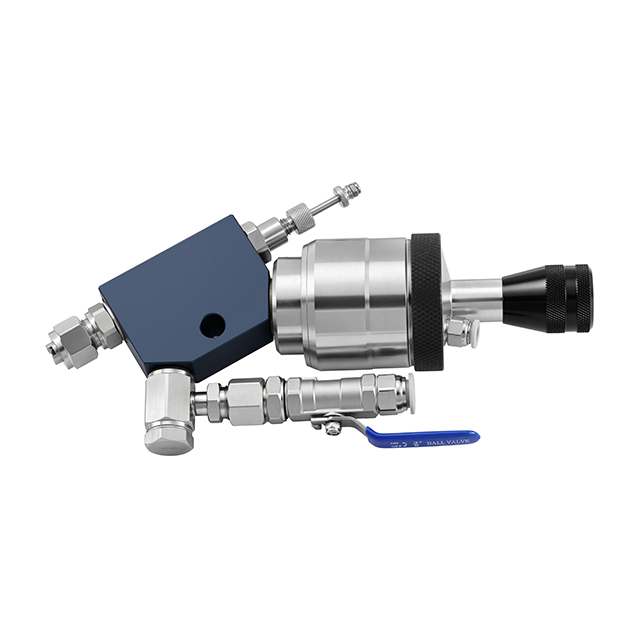
Selecting the right equipment requires a systematic approach. You cannot rely on visual similarities alone. The internal architecture determines the actual performance on the polishing line.
The materials inside the fluid passage dictate the lifespan of the equipment. We must compare hardened stainless steel against tungsten carbide for fluid nozzles and needles. Hardened stainless steel works well for paints and light fluids. However, abrasive buffing slurries destroy stainless steel rapidly.
Tungsten carbide offers vastly superior wear resistance. It withstands the relentless erosion caused by cutting compounds. You should demand transparent data from manufacturers regarding the expected lifecycle. Ask for metrics in actuation cycles or hours of continuous spraying.
Material Type | Abrasion Resistance | Ideal Application | Maintenance Frequency |
|---|---|---|---|
Standard Stainless Steel | Low | Light oils, non-abrasive fluids | High (Weekly) |
Hardened Stainless Steel | Moderate | Coloring compounds, fine finish | Moderate (Bi-weekly) |
Tungsten Carbide | Exceptional | Heavy cutting compounds, coarse grit | Low (Quarterly) |
Proper atomization breaks the liquid compound into uniform droplets. Examine the independent fan and fluid control capabilities of any potential replacement. Independent controls allow operators to adjust the width of the spray without altering the volume of fluid.
You must also assess the consistency of spray patterns under fluctuating plant air pressures. Many facilities experience pressure drops when multiple pneumatic tools operate simultaneously. A well-engineered gun maintains a stable fan pattern even when incoming air pressure dips slightly.
Space is often limited inside an enclosed polishing cell. Evaluate the dimensional footprints of all potential alternatives carefully. Can the new unit utilize existing manifold blocks and mounting brackets?
Custom fabrication requires additional engineering time. It also delays the installation process. If the replacement gun features a drastically different geometry, it might collide with the buffing wheel as the machine articulates. Ensure the physical envelope matches your current setup.
When selecting a new high pressure liquid compound gun, you generally face three distinct categories. Each category serves a different operational philosophy.
Manufacturers engineer these guns specifically with identical mounting profiles to the legacy Acme Polispray units. They share the same thread pitches, bolt patterns, and air port locations.
The primary advantage is minimal line downtime. Your maintenance team can swap the units in minutes. No re-piping or custom bracket fabrication is required. However, they carry a notable drawback. If the manufacturer simply cloned the internal architecture, the gun may inherit the exact same design limitations. You might experience the same frequent clogging or needle wear.
These over-engineered guns prioritize component longevity over a compact size. They feature oversized fluid passages, massive tungsten carbide inserts, and heavy-duty pneumatic cylinders.
They offer dramatically extended intervals between rebuilds. A specialist gun can spray coarse sisal buffing compound for months without failure. The tradeoff involves weight and bulk. They often require heavier mounting arms to prevent vibration. They also demand robust pneumatic valves to actuate their larger internal springs.
Smart-capable guns represent the future of finishing. They feature electronic actuation or precise variable flow control. Instead of relying solely on pneumatic pressure, they integrate directly with your programmable logic controllers.
These guns deliver superior compound savings. They offer Industry 4.0 compliance, allowing you to track actuation counts and fluid consumption digitally. The downside is the steep learning curve for operators. Retrofitting a mechanical line to accept electronic gun controls requires significant engineering effort and updated wiring harnesses.
Swapping a critical component introduces immediate variables into a stable production process. You must manage these risks proactively to prevent catastrophic line shutdowns.
You cannot simply bolt on a new gun and turn on the pumps. You must adjust fluid pump pressures to match the specific gravity capabilities of the new equipment. Different internal nozzle geometries require different fluid pressures to achieve the same flow rate.
If you push compound at the old pressure settings, you might blow out the new gun's packings. Conversely, insufficient pressure leads to sputtering. Take the time to dial in the atomizing air and fluid delivery rates systematically. Document these new baseline settings for the operators.
Switching equipment opens the fluid delivery system to the atmosphere. This exposes the lines to cross-contamination risks. Hardened chunks of old compound can break loose during the switch-over. These chunks will immediately clog the new fluid nozzles.
Emphasize strict flushing protocols before installing the new hardware. Follow these critical steps:
Purge the entire fluid line using warm water or the manufacturer's recommended solvent.
Remove any inline fluid filters and inspect them for metallic debris.
Cycle the supply pump at low pressure to clear dead legs in the plumbing.
Install the new gun only after the fluid runs completely clear.
Bleed all trapped air from the manifold before initiating the first spray cycle.
Never ignore the human element. Maintenance teams build deep muscle memory over years of using specific equipment. They know how to troubleshoot legacy systems blindly. Introducing a new piece of hardware disrupts this confidence.
Outline the necessary training documentation immediately. Create visual standard operating procedures (SOPs) for the new system. Show them exactly how to adjust the fan pattern. Demonstrate the proper teardown sequence. When operators understand the mechanical advantages of the new gun, they will support the transition enthusiastically.
Navigating the procurement process requires a clear evaluation strategy. Focus on continuous operation capabilities rather than superficial feature lists.
Do not base your decision solely on base specifications or initial appearances. You must compare the expected operational lifespan of the gun alongside the durability of its consumable rebuild kits. Evaluate this performance over a rolling 24-month period.
Look at the Mean Time Between Failures (MTBF). A gun requiring a rebuild every two weeks disrupts production continuously. Conversely, a unit engineered to run for six months without intervention keeps the line moving. Prioritize uptime and the reduction of maintenance labor hours.
Verify the localized supply chain for O-rings, needles, and nozzles. An incredibly durable gun becomes a massive liability if spare parts take weeks to arrive from overseas.
Ask the supplier about their inventory levels. Do they warehouse rebuild kits domestically? Can they guarantee next-day shipping for critical fluid nozzles? Your facility cannot afford to leave a polishing cell idle waiting for a simple polyurethane seal. Ensure your chosen vendor offers robust post-sales support.
Never retrofit an entire finishing line based on a brochure. We highly recommend requesting a demo unit. Run a strict 30-day side-by-side comparison on your most demanding buffing head.
Use this testing period to measure actual compound consumption and internal wear. Check the spray pattern width weekly. Measure the needle tip using a micrometer to detect early erosion. A physical proof of concept exposes operational flaws before you commit to a full-scale rollout.
Moving away from a legacy system requires balancing immediate retrofitting effort against long-term maintenance advantages. The right replacement minimizes downtime and elevates the consistency of your finished parts.
Reiterate the importance of matching the gun's structural materials to the abrasiveness of the specific compound used. Tungsten carbide remains the standard for heavy cutting slurries. Ensure the new form factor integrates smoothly with your existing automation cells.
Take action today to protect your production schedule. Consult a fluid dynamics engineer to evaluate your current setup. Request a technical spec sheet comparison tailored specifically for your buffing line layout to ensure optimal atomization.
A: It depends on the required fluid pressure (PSI) of the new gun. You must determine whether your existing diaphragms or pumps can sustain that output without pulsation. Strong pulsation ruins the spray pattern. Verify compatibility with the gun manufacturer before installation.
A: Most facilities establish a baseline based on actuation cycles or weeks of continuous shifts. However, compound abrasiveness is the ultimate deciding factor. Highly abrasive cutting slurries may necessitate bi-weekly maintenance, while finer finishing compounds allow the gun to operate for months.
A: Tungsten carbide is objectively the industry standard for high-wear applications. Hardened stainless steel degrades too quickly when exposed to abrasive micro-particles. Tungsten carbide resists erosion, ensuring your spray pattern remains perfectly consistent over an extended operational lifespan.


