


Views: 0 Author: Site Editor Publish Time: 2026-10-01 Origin: Site


Transitioning from solid bar compounds to liquid pastes represents a massive leap forward for manufacturing facilities. Operators previously applied solid polishing bars by hand. This manual process lacked consistency and scaled poorly. Moving to liquid pastes improves automation capabilities instantly. It yields exceptional consistency across multiple production batches. Robotic cells can now dose precise amounts of compound.
However, this operational shift introduces complex fluid delivery bottlenecks. Standard fluid delivery tools routinely suffer rapid wear. They produce highly inconsistent atomization patterns. They struggle heavily when handling high-viscosity, heavy-cut abrasives. You often end up fighting equipment failures instead of optimizing surface finishes. Standard guns leak, spit, and clog constantly.
We created this engineering guide to solve this exact daily challenge. It provides production engineers and procurement teams an objective framework. You will discover how to evaluate, shortlist, and integrate correct spray equipment. By understanding fluid dynamics and precise hardware specifications, you can transform frustrating maintenance headaches into reliable processes.
Standard paint or clear-coat spray guns degrade rapidly when exposed to aluminum oxide or silicon carbide pastes; hardened internal components are mandatory.
Selecting a liquid buffing compound spray gun requires balancing atomization pressure (to handle viscosity) and transfer efficiency (to reduce compound waste).
Successful implementation relies on holistic system matching: the gun must align with the fluid pump ratio, line diameter, and automated vs. manual cycle times.
Evaluating an abrasive paste spraying system means prioritizing nozzle lifespan and rebuild intervals over initial unit cost.
Microscopic abrasives like tripoli, alumina, and silicon carbide act as liquid sandpaper. When you pump them at high velocities, they aggressively attack standard equipment. Fluid dynamics inside standard stainless steel components simply cannot handle this severe abrasion.
Standard needles and fluid seats lose their tight manufacturing tolerances within days. The abrasive particles carve deep grooves into the metal. The needle fails to seat properly against the nozzle. This rapid degradation leads directly to dripping nozzles. It also causes severe pattern distortion. Liquid polishing compound application demands much tougher hardware to survive continuous shifts.
Abrasive pastes often behave as non-Newtonian fluids. They exhibit shear-thinning properties under high pressure. Standard fluid passages feature narrow bottlenecks and sharp internal turns. These flow restrictions cause the solid particles to separate from their liquid binders. This separation leads to packing-out and dry-packing inside the gun body. You might also experience destructive pump cavitation inside narrow fluid channels. These combined flow restrictions prevent consistent compound delivery entirely.
This inconsistency creates massive operational fallout. You waste expensive polishing compound constantly as it drips onto the floor. Dry buffing wheels will scorch and burn your valuable workpieces. Burnt parts increase your scrap rates and destroy profit margins. Furthermore, you face excessive downtime for constant gun rebuilds. Production lines stop entirely while maintenance technicians replace ruined internal parts.
You must choose the correct spray technology type carefully. The right Liquid Buffing Compound Spray Gun depends entirely on your specific production environment and material thickness.
Mechanism: They use immense fluid pressure for primary atomization. This pressure often exceeds 1000 PSI. They supplement this mechanical pressure using compressed air to shape the spray pattern.
Best for: Highly viscous, heavy-cut compounds. They excel in fully automated, high-volume production lines. You will frequently see them integrated seamlessly into robotic finishing cells.
Trade-offs: They carry a significantly higher initial system cost. They also require robust safety protocols. High-pressure fluid injection hazards pose serious risks to operators.
Mechanism: These guns rely entirely on compressed air to atomize fluids. They operate at much lower fluid pressures.
Best for: Fine polishing liquid pastes and color compounds. They work perfectly at manual application stations. They suit facilities prioritizing high transfer efficiency. They minimize hazardous overspray on the shop floor.
Trade-offs: Heavy-cut pastes clog them quickly. They remain highly sensitive to plant air pressure fluctuations. A sudden drop in line air ruins the spray pattern instantly.
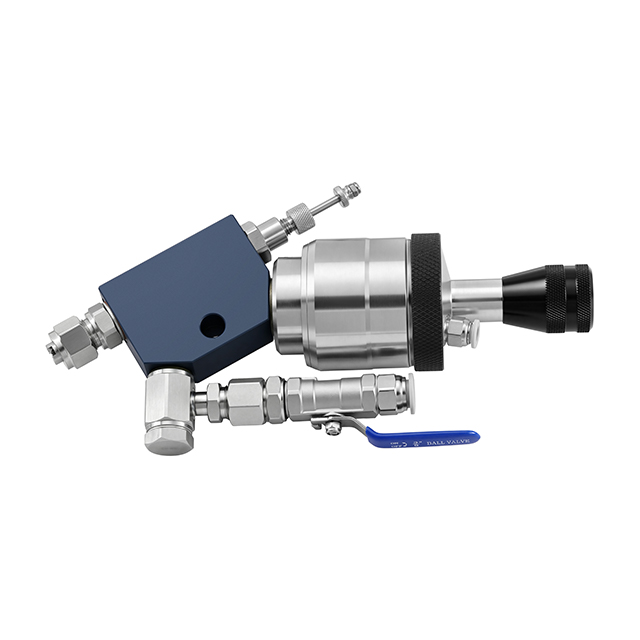
When you evaluate an abrasive paste spraying system, certain engineering features remain absolutely non-negotiable.
Tungsten carbide is mandatory for the fluid nozzle and needle tip. It withstands constant abrasion significantly better than standard stainless steel. You also need self-adjusting fluid packings. Look specifically for PTFE or UHMWPE packing materials. They resist chemical breakdown from aggressive paste binders like fats and oils. They also compensate automatically for minor shaft wear over time.
Look for straight-through or wide-bore fluid passages. These channels typically range from 1.5mm to 3.0mm in diameter. The exact size depends heavily on your abrasive aggregate size. This wide, linear design prevents internal bridging. Bridging occurs when particles lock together like a stone arch. Straight channels keep the abrasive slurry moving smoothly.
You need fully independent fan, fluid, and air controls. They allow operators to maintain a wide, even fan pattern on the buffing wheel. A heavy center sprays too much compound in one spot. This causes uneven wheel loading and unpredictable cut rates. Even loading ensures consistent polishing results across the entire workpiece.
Automated lines require specialized mounting solutions. Manifold-mounted designs allow operators to remove the gun quickly for service. You do not need to disconnect messy fluid lines. This specific modular feature reduces maintenance downtime drastically.
Table: Fluid Nozzle Wear Resistance and Application Comparison
Component Material | Abrasion Resistance Level | Typical Lifespan (Production Shifts) | Ideal Compound Application |
|---|---|---|---|
Standard Stainless Steel | Low | 15 - 30 | Light finishing liquids, non-abrasive clears |
Hardened Brass | Very Low | 5 - 10 | Thin lubricants, pure water |
Tungsten Carbide | Extremely High | 300+ | Heavy-cut abrasive pastes, high-solids |
Silicon Nitride Core | Ultra High | 500+ | Continuous robotic heavy-cut polishing |
A premium spray gun will fail quickly if supporting systems fall short. The delivery infrastructure requires just as much engineering attention.
Your diaphragm or piston pump must supply consistent fluid pressure. A sluggish pump ruins the gun's atomization. You must also use correctly sized, wire-braided fluid hoses. Standard rubber hoses expand outward under high pressure. This expansion causes severe pressure drops at the nozzle. Wire-braided lines maintain rigid pressure delivery during rapid trigger cycles. They prevent the dreaded trigger delay effect.
You must actively mitigate the risk of separation. Abrasive solids separate quickly from liquid binders inside static plumbing lines. Heavy alumina particles simply fall out of suspension. You need continuous fluid circulation systems. Recirculating guns keep the paste completely homogenized right up to the nozzle. They prevent dry-packing inside the fluid passages during weekend line pauses.
Set transparent expectations for preventative maintenance. Hardened guns still require strict daily flushing routines. You must outline realistic rebuild schedules for your maintenance team.
Flush the system using approved solvents at the end of every shift.
Check the needle seating every 300 hours of active trigger time.
Inspect the air cap for dried compound buildup every four hours.
Proactive replacement prevents catastrophic application failures during active production runs.
Do not guess when selecting equipment. Follow this structured engineering approach to specify the correct tool.
Step 1: Define the Compound Specs. Audit the specific gravity and viscosity (measured in cps) of your current paste. Measure the exact abrasive grit size. These distinct metrics dictate your minimum nozzle size requirements.
Step 2: Map the Production Environment. Calculate your required spray cycle times. Measure the exact gun-to-wheel distance. Determine whether your application is manual, semi-automated, or fully robotic. Robots can handle heavier guns than human operators.
Step 3: Evaluate Air and Fluid Infrastructure. Verify your existing plant CFM capacity. Check your fluid pump ratios carefully. A 15:1 ratio pump delivers vastly different fluid pressure than a 5:1 pump. Ensure your compressor can feed multiple guns simultaneously without dropping pressure.
Step 4: Conduct a Pilot Test. Never purchase fleet-wide equipment without testing it first. Run a strict 30-day wear test on a single production cell. Measure actual abrasive wear on the fluid tip using calipers. Evaluate your buffing wheel loading consistency visually. Track your reject rates before expanding the rollout.
Investing in a purpose-built, hardened spray system shifts your application approach entirely. It changes fluid delivery from a frustrating maintenance headache into a highly controlled, repeatable process variable. You achieve consistent surface finishes while drastically reducing wasted material on the shop floor.
Keep these final action steps in mind:
Prioritize tungsten carbide internal components to survive heavy-cut abrasives.
Match your spray gun technology directly to your fluid viscosity and automation level.
Implement continuous fluid circulation to prevent dense paste settling.
Always run a 30-day pilot test before executing a facility-wide equipment rollout.
We strongly recommend engaging directly with manufacturers for a material trial. Request an on-site fluid dynamics audit before you commit to a specific gun architecture. To learn more about matching equipment to your unique polishing paste, contact our engineering team to discuss your next Liquid Buffing Compound Spray Gun integration.
A: You typically need a nozzle ranging from 1.8mm to 2.5mm or larger. The exact size depends heavily on the viscosity of your paste and the abrasive grit diameter. Thicker, heavier-cut compounds require significantly wider fluid passages. This extra width prevents particle bridging and internal clogging during continuous operation.
A: Tungsten carbide components outlast standard stainless steel by extraordinary margins. In a high-volume production environment, stainless steel needles might fail in just 15 to 30 shifts. A tungsten carbide equivalent can easily last over 300 shifts. This extreme durability drastically reduces your operational downtime and replacement costs.
A: No, you should never mix them. Using the same gun causes severe cross-contamination. Heavy-cut abrasives will embed into the finer color polishing paste. This immediately scratches and ruins your final mirror finish. You must install dedicated fluid delivery lines and completely separate guns for each compound type.
A: Sputtering usually indicates air entrapment within your fluid delivery lines. It can also stem from pump cavitation if the paste is too thick for the pump ratio. Finally, check your gun packings. Worn fluid packings allow air to bleed directly into the fluid passage, destroying the spray pattern.


