


Views: 0 Author: Site Editor Publish Time: 2026-08-23 Origin: Site


Unplanned downtime caused by clogged spray nozzles directly erodes production margins. This holds especially true when handling abrasive or rheologically complex materials like polishing compounds. Every minute you spend clearing a blocked tip translates directly to lost revenue. Non-Newtonian fluids do not behave like water. Their apparent viscosity fluctuates rapidly based on applied shear stress. Standard atomization equipment simply cannot reliably handle these immense variations. When internal pressure drops, these fluids thicken instantly, causing immediate blockages.
This guide establishes the strict engineering criteria for evaluating and integrating specialized spray technology. We will explore how to maximize uptime and improve transfer efficiency across your lines. You will learn the exact hardware requirements needed to maintain continuous fluid flow. We also detail system integration constraints to help you avoid common operational pitfalls.
Standard internal-mix spray guns fail with non-Newtonian fluids due to shear-induced viscosity shifts and particulate accumulation.
An effective Automatic Polishing Wax Spray Gun relies on external-mix atomization and unobstructed fluid passages to prevent tip curing.
Evaluating a High viscosity liquid wax spray gun requires assessing long-term operational expenditures, focusing on maintenance intervals, abrasive wear resistance, and clean-out mechanisms.
Proper system implementation requires active temperature management and automated purge cycles to maintain fluid stability.
Fluid dynamics change rapidly under mechanical pressure. We categorize non-Newtonian fluids into two distinct types based on their reaction to stress. Shear-thinning (thixotropic) fluids become less viscous under mechanical stress. They flow easily when pumped aggressively. However, they thicken instantly when the stress stops. Shear-thickening (dilatant) fluids react oppositely. They harden and resist flow under high pressure.
Standard internal-mix nozzles create immense pressure variations. These variations cause unpredictable viscosity spikes inside the gun body. The fluid behaves erratically during the spray cycle. It might atomize perfectly for a few seconds. Then, a slight pressure drop causes the fluid to thicken instantly right at the nozzle tip. This thick mass blocks the airflow and halts production entirely.
Particulate suspension creates another major obstacle for standard hardware. Manufacturers blend heavy abrasives into polishing waxes. Aluminum oxide remains a very common additive. High internal pressure forces these heavy compounds to separate from their carrier fluids. The liquid base sprays out freely. The solid abrasives remain trapped inside the nozzle chamber. They pack tightly together and cause instant mechanical blockages. Regular purging cannot remove this compacted material easily.
Common Mistake: Relying on increased pump pressure to force clogs through standard nozzles. This simply compacts the separated abrasives tighter, permanently damaging the fluid seat.
Inadequate equipment drains your operational budget continuously. Micro-stops happen constantly throughout the shift. Operators must halt the line to clear clogged tips manually. Inconsistent spray patterns lead directly to rejected parts. You waste valuable polishing compound through poor transfer efficiency. The manual cleaning labor adds up to hundreds of lost hours annually.
To solve these fluid dynamics problems, you need specific hardware architectures. Atomization method stands as the most critical evaluation factor. You must understand the internal mechanics to prevent failures.
Internal-mix systems combine compressed air and fluid inside the air cap. They easily back up when fluid pressure drops. External-mix systems keep the air and fluid completely separate. They only meet outside the nozzle. This eliminates internal pressure collisions completely. External mixing remains absolutely essential for high-viscosity materials.
Architecture | Mixing Location | Fluid Pressure Response | Best For |
|---|---|---|---|
Internal-Mix | Inside the air cap chamber | Prone to back-pressure and stalling | Low-viscosity, Newtonian fluids |
External-Mix | Outside the nozzle tip | Independent streams prevent collisions | High-viscosity, abrasive emulsions |
Maximum Free Passage (MFP) design also determines system reliability. MFP refers to the largest spherical particle a nozzle can pass. You need completely straight-through fluid paths. Internal vanes or flow restrictions create dangerous choke points. Unobstructed channels allow heavy emulsions to flow freely without jamming.
Abrasive fluids destroy standard metals rapidly on the Mohs hardness scale. You must demand highly wear-resistant components. Tungsten carbide provides exceptional durability against heavy abrasives. Hardened stainless steel works acceptably for slightly less abrasive mixtures. Fluid needles and seats strictly require these premium materials. Otherwise, the suspended solids will carve deep grooves into the seating surfaces, causing continuous leaks.
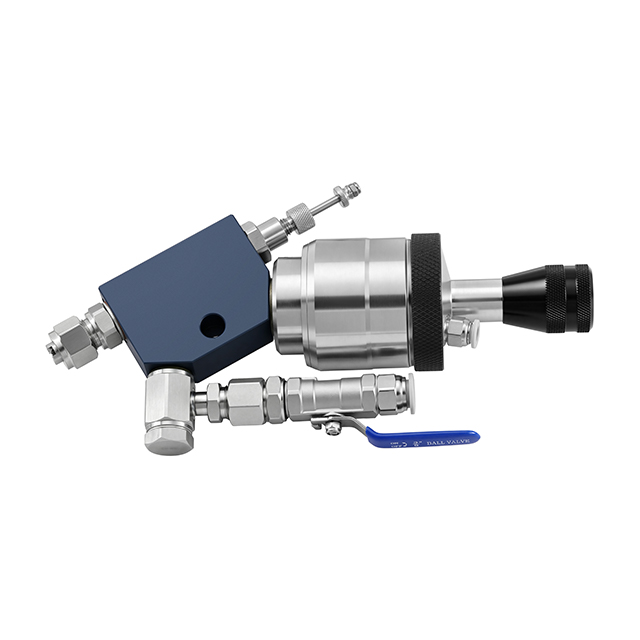
Automation demands high precision and rapid response times. You must evaluate the required response time for your spray valves. You cannot afford sluggish equipment on a high-speed line.
Precision Actuation: Pneumatic or electronic triggers need immediate response capabilities in milliseconds. Sluggish valves cause the gun to "spit" or drip. This typically happens at the exact beginning and end of spray cycles. Precise actuation eliminates this material waste entirely.
Automated Clean-Out Mechanisms: Look for integrated self-cleaning needles. Engineers often call these clean-out needles. They manually clear the orifice with every single trigger release. The needle physically pushes through the opening, preventing the compound from curing at the tip.
Recirculation Capabilities: Assess hardware supporting continuous fluid recirculation. Dead legs in plumbing cause immediate separation of wax emulsions. The hardware must allow continuous flow right up to the nozzle tip and back. This prevents stagnation and keeps solids suspended perfectly.
Even premium atomizers fail without proper system integration. You must control the external variables affecting your fluid. Temperature heavily influences baseline viscosity.
You must implement active temperature management systems. Cold polishing wax becomes incredibly thick and resists pumping. Heated hoses keep the compound warm during transit. Fluid jackets wrap around the spray guns to maintain heat directly at the point of atomization. Proportional-Integral-Derivative (PID) controllers ensure consistent temperatures. This ensures the fluid reaches the gun at a highly predictable viscosity.
Fluid delivery infrastructure requires robust mechanical engineering. Standard centrifugal pumps struggle heavily with thick pastes. You should deploy high-pressure double diaphragm pumps instead. Extrusion pumps also provide excellent results for heavier materials. These pumps deliver a continuous, pulsation-free supply to any non-Newtonian fluid sprayer. A reliable feed remains critical for maintaining a stable spray pattern.
Standard Operating Procedures (SOPs) guarantee long-term uptime. You must establish strict operational guidelines to mitigate inevitable buildup.
Establish baseline flushing protocols for the end of every production run.
Determine exact purging frequencies based on shift schedules and material curing rates.
Create preventive maintenance schedules requiring weekly visual inspections of fluid seats.
Document daily cleaning requirements for air caps and retaining rings.
Do not buy standard guns simply because they cost less upfront. You must compare the initial capital expenditure against long-term operating realities. Cheap equipment causes excessive labor and continuous downtime. Frequent part replacements wipe out any initial financial savings quickly.
Use specific performance metrics for your shortlisting process. First, evaluate the Mean Time Between Failures (MTBF) for nozzles. Higher MTBF means fewer unexpected line stoppages. Second, measure the transfer efficiency percentage. Better transfer efficiency reduces wasted polishing compound and lowers booth maintenance. Third, verify electrical compatibility with your existing robotic or automated line controls.
Always recommend initiating a localized pilot test before full-scale procurement. Ask the equipment manufacturer for a fluid-viscosity lab analysis. Send them your exact polishing compound. Have them test it through their proposed hardware. Real-world validation reduces integration risks drastically before installation day.
Reliable atomization of complex fluids remains a strict engineering problem. You solve it through specific hardware architecture, not generic spray guns. Standard atomizers simply cannot handle shear-dependent viscosity fluctuations or heavy particulate suspensions.
Investing in purpose-built external-mix technology represents the only mathematically sound approach for continuous production environments. Automated spray guns provide continuous operation without constant manual intervention. They resist abrasive wear and self-clean automatically.
Take action to protect your production margins. Request a technical consultation regarding your specific fluid challenges today. Schedule comprehensive fluid testing to verify hardware compatibility. Ask for a customized hardware demonstration directly on your automated line.
A: Purpose-built hardware handles materials exceeding 100,000 cps. However, static viscosity matters less than shear-rate dependence. A material measuring 50,000 cps at rest might drop to 5,000 cps under high shear. Equipment must be calibrated to the fluid's specific rheology curve during atomization.
A: External-mix designs keep compressed air and fluid completely isolated inside the gun body. The streams only meet outside the fluid cap. This eliminates internal turbulence and back-pressure. Without internal collisions, the fluid cannot be forced backward to cure inside the internal fluid passages.
A: While the physical hardware overlaps, you cannot use the exact same setup. Pump pressures, atomizing air ratios, and nozzle geometries must be tuned specifically. Shear-thickening fluids require lower velocity delivery to prevent hardening. Shear-thinning fluids require controlled high shear to maintain flow.
A: Replacement timelines depend entirely on material abrasiveness and production volume. With highly abrasive aluminum oxide compounds, standard stainless steel fails in weeks. Tungsten carbide components often last six to twelve months under continuous three-shift production. Regular visual inspection dictates the exact replacement schedule.


